- WKND AI
- Posts
- White House Scared Of Mythos?
White House Scared Of Mythos?
+ChatGPT's Goblins Problem
In partnership with

Your prompts are leaving out 80% of what you're thinking.
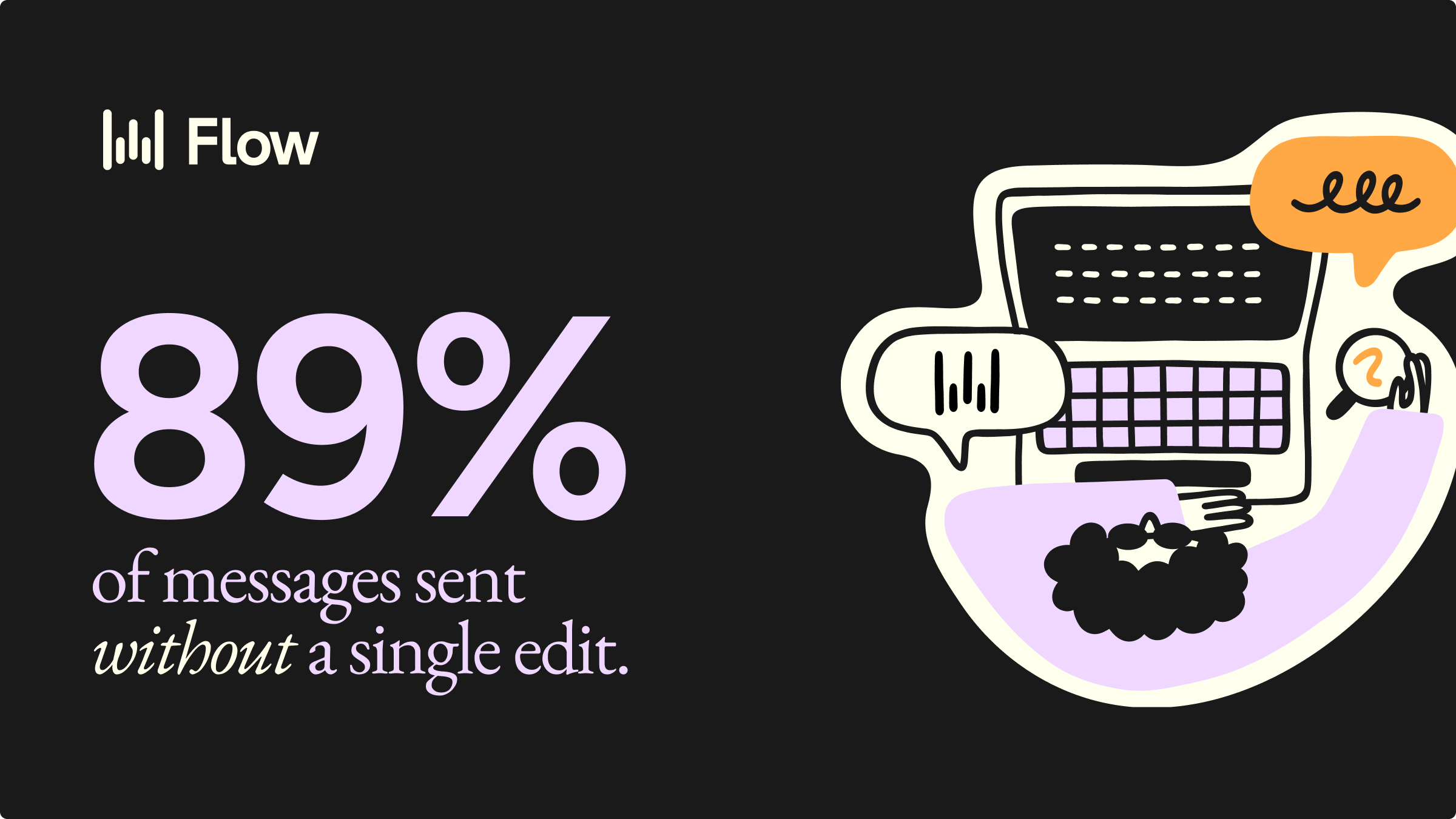
When you type a prompt, you summarize. When you speak one, you explain. Wispr Flow captures your full reasoning — constraints, edge cases, examples, tone — and turns it into clean, structured text you paste into ChatGPT, Claude, or any AI tool. The difference shows up immediately. More context in, fewer follow-ups out.
89% of messages sent with zero edits. Used by teams at OpenAI, Vercel, and Clay. Try Wispr Flow free — works on Mac, Windows, and iPhone.
Hello WKND AI Warriors!
The White House is blocking Anthropic from scaling its Mythos model to more companies, while quietly seeking exclusive government access to the same system.
Also, the Pentagon signed classified AI deals with OpenAI, Google, Microsoft, Nvidia, and others, leaving Anthropic out as its lawsuit continues.
Plus, Microsoft launched a Word Legal Agent that reviews contracts and flags risks directly inside Word.
Oh yeah, ChatGPT’s “Nerdy” mode went viral after users noticed it kept talking about goblins and gremlins, a quirk OpenAI says came from its training process.
Today’s newsletter includes:
AI NEWS RECAP
🤿 AI DEEP DIVE
📰 AI NEWS RECAP
White House Scared Of Mythos?
The White House is worried about Anthropic…again.
Not because of what its models can do today.
Because of what they might enable next.
The focus is something called “Mythos.”
A system that can analyze software at scale.
Find vulnerabilities.
And in the wrong hands, potentially exploit them.
That is where the concern comes from.
Officials are not reacting to hype.
They are reacting to the possibility that a single system could:
• Scale capabilities that used to require entire teams
• Identify weaknesses across critical infrastructure
• Lower the barrier to cyber attacks
Anthropic wanted to expand access.
The government pushed back.
Not fully rejecting the technology.
But slowing it down.
Questioning who should be allowed to use it.
That tension is new.
For years, the risk conversation around AI focused on content.
Misinformation.
Hallucinations.
Bias.
Now it is shifting toward capability.
What happens when models stop just generating text
and start identifying real world weaknesses in systems?
What happens when that capability is widely distributed?
The concern is not theoretical.
If tools that can map vulnerabilities become easier to access,
the balance between defense and offense changes.
Faster than most institutions are prepared for.
That is what makes this moment worth watching.
Not the model.
The reaction to it.
Because the reaction tells you how seriously governments are starting to take what these systems can actually do.
The War Department signed classified-network AI agreements with SpaceX, OpenAI, Google, Nvidia, Reflection, Microsoft, AWS, and Oracle at the two highest tiers of military cloud security. Anthropic is conspicuously absent, still locked in its Pentagon lawsuit even as its Mythos model is reportedly the one the military most wants access to.
Microsoft launched a Word Legal Agent in Copilot Frontier that drafts, reviews, and flags risks in legal documents inside Microsoft 365. It handles structured, repeatable tasks like contract review, though Microsoft is clear it does not provide legal advice and is not a substitute for a lawyer.
Spotify introduced a green "Verified by Spotify" badge for human artists, requiring proof of real concerts, merchandise, and social presence to qualify. AI-persona accounts are ineligible, though Spotify still does not ban AI music outright, making the badge more of a trust signal than an enforcement tool.
Starting with GPT-5.1, ChatGPT's "Nerdy" personality mode began obsessively using goblins and gremlins as metaphors, a quirk that grew stronger with each model generation until users noticed and it went viral. OpenAI's blog post explained the training process accidentally reinforced the behavior, and the company has since patched it out.
Anthropic launched Claude Security as a public beta, positioning Claude as a first-pass cybersecurity analyst that triages alerts, hunts vulnerabilities, and explains attack chains in plain language. It is aimed at security teams buried in alert volume who need a skilled analyst running triage before a human takes over.
Nvidia's Nemotron 3 Nano Omni is a 30-billion-parameter multimodal model that unifies vision, audio, and language in one architecture, but only activates 3 billion parameters per inference for efficiency. It runs on a single GPU at the edge, achieves nine times the throughput of comparable open models, and is Nvidia's clearest signal yet that it is competing in the AI model race, not just selling chips to others.
🤿 AI DEEP DIVE
You’re not going to want to skip these:
TedTalk by OpenClaw’s creator
Sequoia Capital with Andrej Karpathy
How does OpenClaw actually work?
How'd you like this newsletter?Love it or hate it? Let us know why! |
How can you help?
Refer my newsletter to help others learn AI.
Missed last week’s edition?
